
A truck buyer's guide to 9-inch LED driving lights
Nine inches is where the truck segment has settled, so the size is rarely the decision. Sealing, how you read the output figures, and voltage are.
Truck driving lights start where 4x4 lights stop. On a truck or heavy van running 24 volts, the lamp that gets fitted is usually a nine-inch unit, mounted in pairs or fours on the front of the cab or the bull bar. The size is largely settled by the space available and by what the segment has standardised on, which means the size is rarely the decision.
Ask a fleet buyer or a truck accessory shop what they check first and the honest answer is the face of the lamp, not the spec sheet. That is a real observation about how the decision gets made, and there is a section on it below. It is not the order we would tell you to buy in. What decides whether a lamp is still working after three winters is how it is sealed and how it handles current, and neither of those is visible from the front.
Sealing is the first thing to settle
Most of the driving light range is rated IP68. Four models are rated IP67, and every product page states which rating applies to that model rather than leaving you to read it off a range summary.
Treat whatever you are quoted as a starting point and ask for it in writing against the exact model and the exact build you are ordering. That is worth doing with any supplier, us included. A rating stated for a product family is not a rating for a part number, and on a truck the lamp sits in the worst position on the vehicle for water, grit and thrown stones.
Two things the rating does not cover, both of which matter more on a truck than on a weekend 4WD. Neither IP67 nor IP68 is a pressure-washing test, so a lamp that holds both can still take a lance at close range and lose. Neither is a corrosion test, so winter salt is a separate question about housing material, bracket plating and how the loom is terminated. We set out what each digit actually puts a product through in what IP67 and IP68 actually test, and the short version is that these are results from different tests rather than grades on a single scale.
Output, and the two numbers that mislead
The numbers that sell driving lights are watts and lumens, and both reward a careful read. Watts tell you consumption, not output. Lumens tell you total light, not reach. Two lamps with identical lumen figures can behave completely differently on the road depending on their optics, because a tight beam that concentrates light down the centre of the carriageway is doing a different job from one that spreads it across the verges, and the lumen figure is the same either way.
We covered how to read these figures against each other in our guide to lumens, watts and beam distance, and everything in it applies at truck scale. The practical version for a buyer is that output figures compare lamps within one optic family and mislead across families, so ask what the beam is shaped to do before you compare two numbers.
One figure that is easy to check and genuinely matters on a truck is input voltage. The range runs wide-voltage inputs across four bands: 12-24V DC, 9-36V DC, 9-30V DC and 9-24V DC, depending on the model. Every one of those covers both a 12V ute and a 24V truck without a converter, so a mixed fleet can be one part number instead of two. Check which band the model you are quoting is built to, because the band is a property of the model rather than of the range.
The face of the lamp, and design generation
Now the thing buyers actually look at first. A truck wears its driving lights in the most visible position it has, and a company truck is a rolling business card, so four lamps with a dated front end age the whole vehicle. Resellers feel this twice over, because they have to stock what their own customers will pick off a wall.
The useful question is design generation rather than taste. Is the lens layout something buyers have seen for five years on every budget listing, or does it read as current? A lamp bought for a fleet has to still look current at the end of its service life, not on the day it ships.
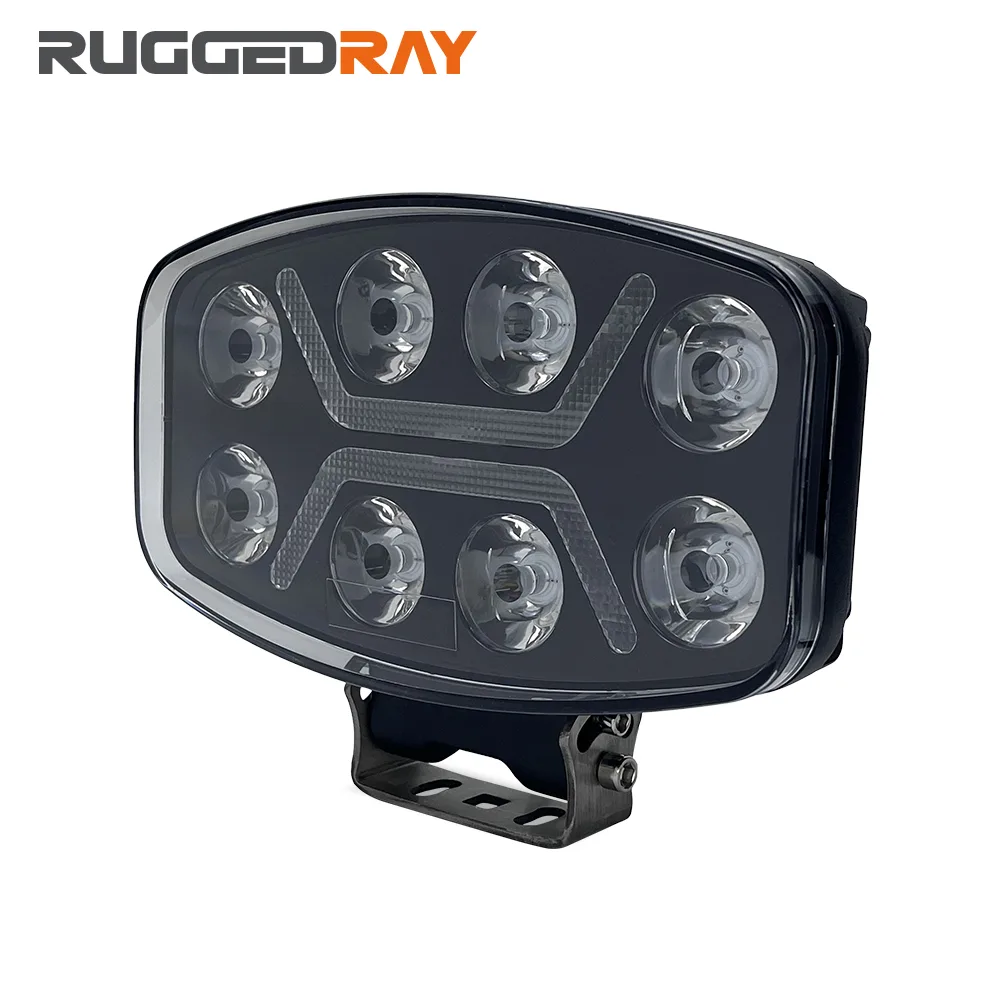
Housing shape sits in the same category. Buyers ask for round lamps, for wider flatter ones, and for the newer faces that do not belong to either group, and none of the three beats the others on performance at the same size and power. So treat shape as an identity decision and make it like one: match the cab, match the rest of the build, and pick one as a house style rather than mixing them across a fleet. Which shape a market leans towards is a separate question, and the answer is not the same everywhere: we set out how Nordic and Australian buyers differ on lamp count, mounting position and shape.
Buying for a fleet
For wholesale and private label buyers the nine-inch driving light is a forgiving product to range, because one size covers most of the truck segment and the variation sits in power and optics rather than in fitment. The decisions worth spending time on are the ones above.
Warranty and after-sales matter more at truck scale because downtime is counted in freight rather than weekends. Settle three things with any supplier before the order: the warranty term on the specific model, who pays freight on a warranty claim, and whether the model stays in production long enough to match replacements across a fleet in two years. Good suppliers answer all three without hesitating, and the answers belong in writing with the rest of the order terms.
If you are building a branded range rather than reselling, our guide to private label 4x4 and truck lighting covers how that works.
A last practical note. Four driving lights on one truck is a real electrical load spread across several circuits, and how you switch them shapes the whole install. That is the job of the switch panel, and our switch panel range is built for this kind of multi-lamp front end.
See the range on our LED driving lights page.